
How to Search Smith County Court Records
Public Smith County District Court case information is searched through Kansas CaseSearch, the Kansas Judicial Branch portal for district court records. Smith County is part of the 17th Judicial District, so CaseSearch is the starting point for public civil, criminal, domestic, probate, small claims, traffic, and other district court cases when the file is not sealed or restricted. The official county website does not publish a separate Smith County court-record portal.
Before searching, gather the case number, full party name, business name, citation number, filing year, and case type if known. Name searches can return broad results. Case-number searches are cleaner when the number is known. Municipal ordinance and city traffic matters may be handled by Smith Center Municipal Court, so a missing district result does not always mean no local court matter exists.
- Open Kansas CaseSearch and choose the best known term: case number, party name, business name, or citation.
- Screen results for Smith County District Court or the 17th Judicial District, then compare filing dates and case titles.
- Read the docket event list before relying on the result. Docket entries show filings, hearings, orders, judgments, warrants, and disposition events.
- Contact Smith County District Court for certified copies, older paper records, sealed-record questions, or documents not visible online.
- Use Smith Center Municipal Court for city ordinance or municipal citation questions, and use county open-records channels for non-court agency records.
The official Smith County homepage shows the county offices that work beside the court, including the sheriff, county clerk, county attorney, and register of deeds.
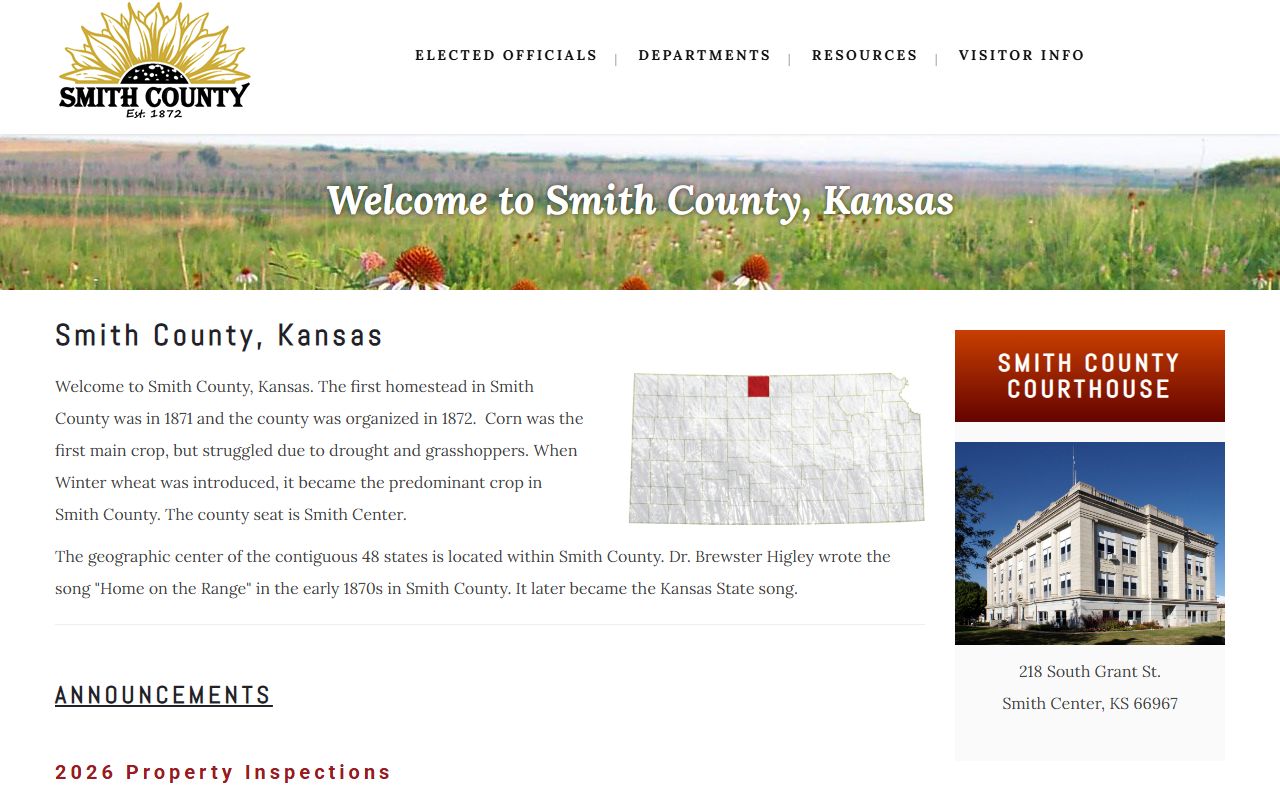
That county office directory matters because not every public record is a court file; some requests belong with the sheriff, county clerk, attorney, or register of deeds instead.
The City of Smith Center homepage is also relevant when a record question involves municipal court, city police, or a city ordinance matter.
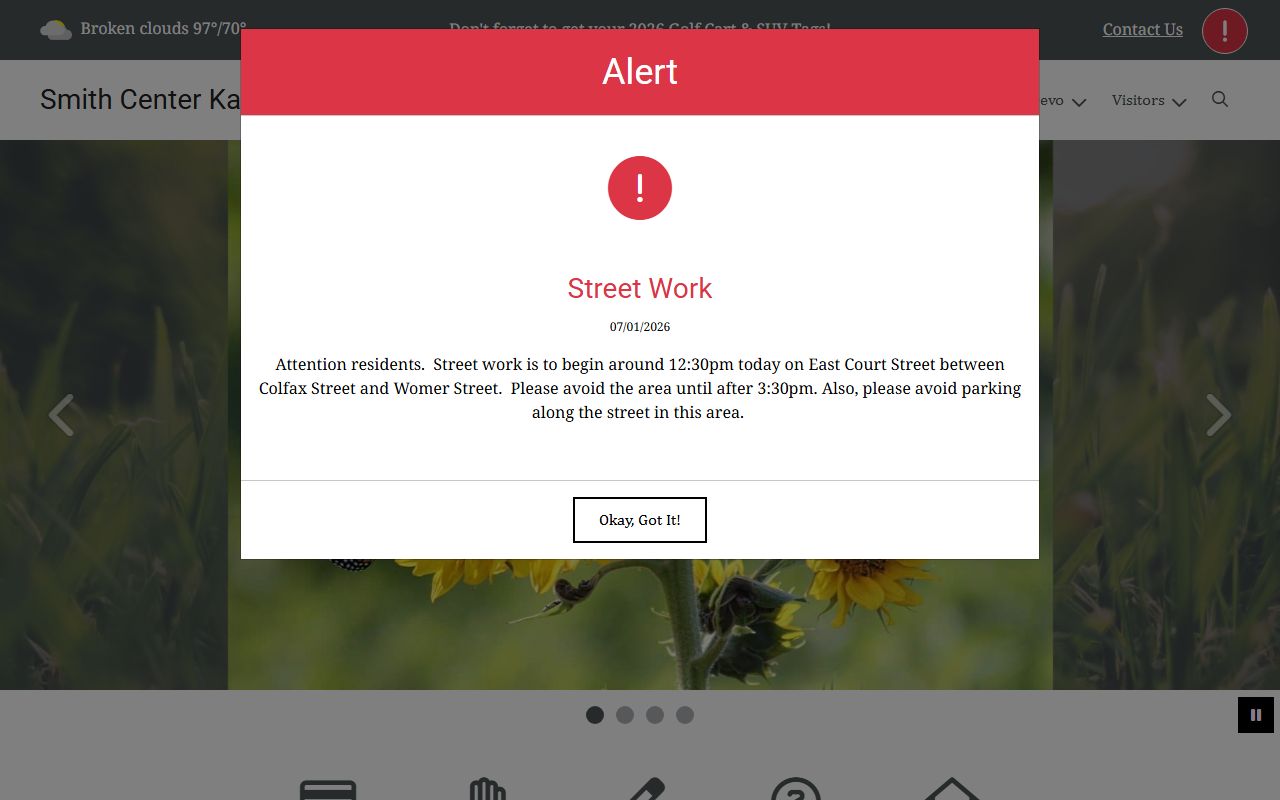
City sources are separate from District Court sources, so municipal citations and city-law contacts should be checked through Smith Center rather than assumed to be county court records.
| Search Field | Best Use | Smith County Notes |
|---|---|---|
| Case Number | Exact district court lookup | Best for known Smith County District Court files. |
| Party Name | Individual litigant or defendant | Use full names and compare county, date, and case title. |
| Business Name | Entity party search | Useful for civil and small-claims matters. |
| Citation | Traffic or citation-linked case | Some municipal citations may require Smith Center Municipal Court instead. |
Smith County Court System
Kansas uses a unified judicial branch. The Kansas Supreme Court is the highest state court, the Kansas Court of Appeals hears most appeals, and Kansas District Courts are the main trial courts. Smith County District Court sits in the 17th Judicial District with Decatur, Graham, Norton, Osborne, and Phillips counties.
Kansas Judicial Branch materials explain the statewide structure, while District Courts are described as trial courts with general original jurisdiction. Smith County does not have a separate county court, justice court, probate court, or family court division in the research file. Most trial-level matters route through District Court unless they are city ordinance matters in municipal court.
The Kansas court system overview places Smith County cases within the same unified judicial branch used across the state.
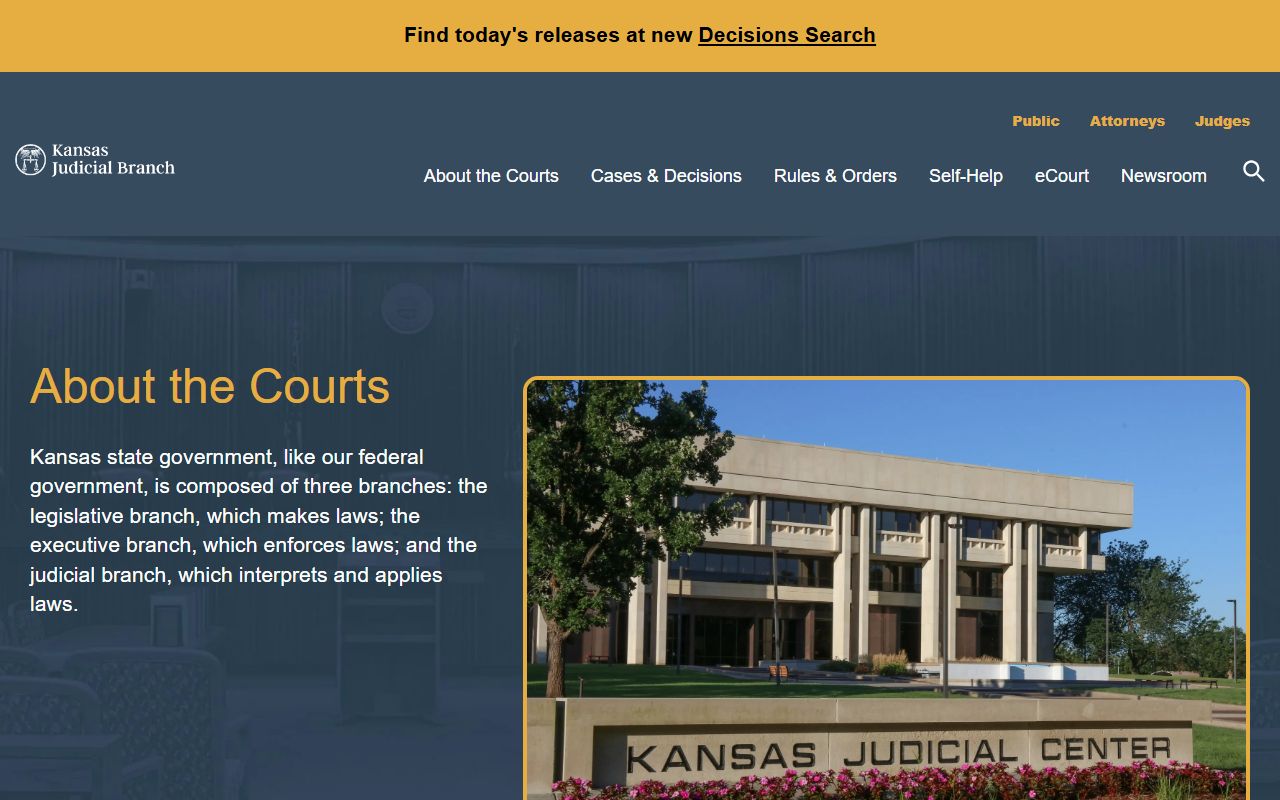
That statewide structure explains why a Smith County case can move from the District Court to the Kansas Court of Appeals rather than to a separate county appellate court.
The Kansas District Courts overview describes the trial-court level that handles most Smith County court records.
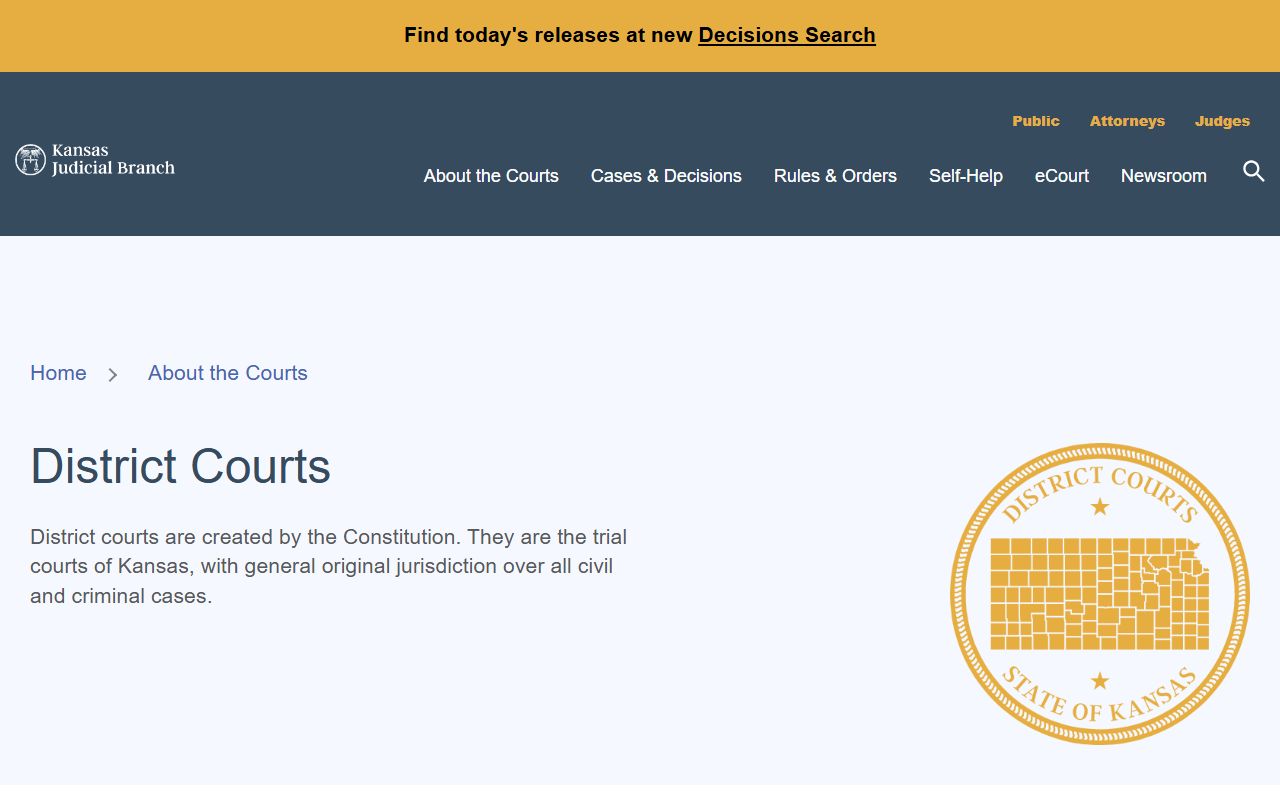
For Smith County, that District Court role covers criminal, civil, divorce, probate, juvenile, small claims, guardianship, and conservatorship records when public access is allowed.
Case flow: Smith Center Municipal Court or Smith County District Court › Kansas Court of Appeals › Kansas Supreme Court when further review is allowed.
| Court or Office | Jurisdiction | Local Role |
|---|---|---|
| Smith County District Court | General trial jurisdiction | Criminal, civil, divorce, probate, juvenile, small claims, guardianship, and conservatorship cases. |
| Smith Center Municipal Court | City ordinance jurisdiction | Municipal traffic and ordinance cases; court schedule by phone. |
| Kansas Court of Appeals | Intermediate appeals | Most appeals from Kansas District Courts. |
| Kansas Supreme Court | Highest Kansas court | Final state-law authority and direct review in select case types. |
Smith County Courthouse
Smith County District Court is located at the Smith County Courthouse in Smith Center. The Kansas Judicial Branch lists Smith County District Court at 218 S Grant St., PO Box 273, Smith Center, Kansas 66967, with phone service through 785-282-5140. The courthouse is also the center for several county offices, including the County Clerk, Register of Deeds, County Attorney, Treasurer, and other county departments.
The county visitor material gives unusually detailed courthouse history. The courthouse was completed January 1, 1920, in modern classical eclecticism style. The building is listed as 97 feet long, 81 feet wide, and 47 feet high, with gray Ozark granite at the lower level and cream Bedford stone above. Interior notes include tile floors, wainscoting, and marble stairways.
The Smith County visitor page describes the courthouse, Smith Center, nearby highways, and the courthouse square setting.
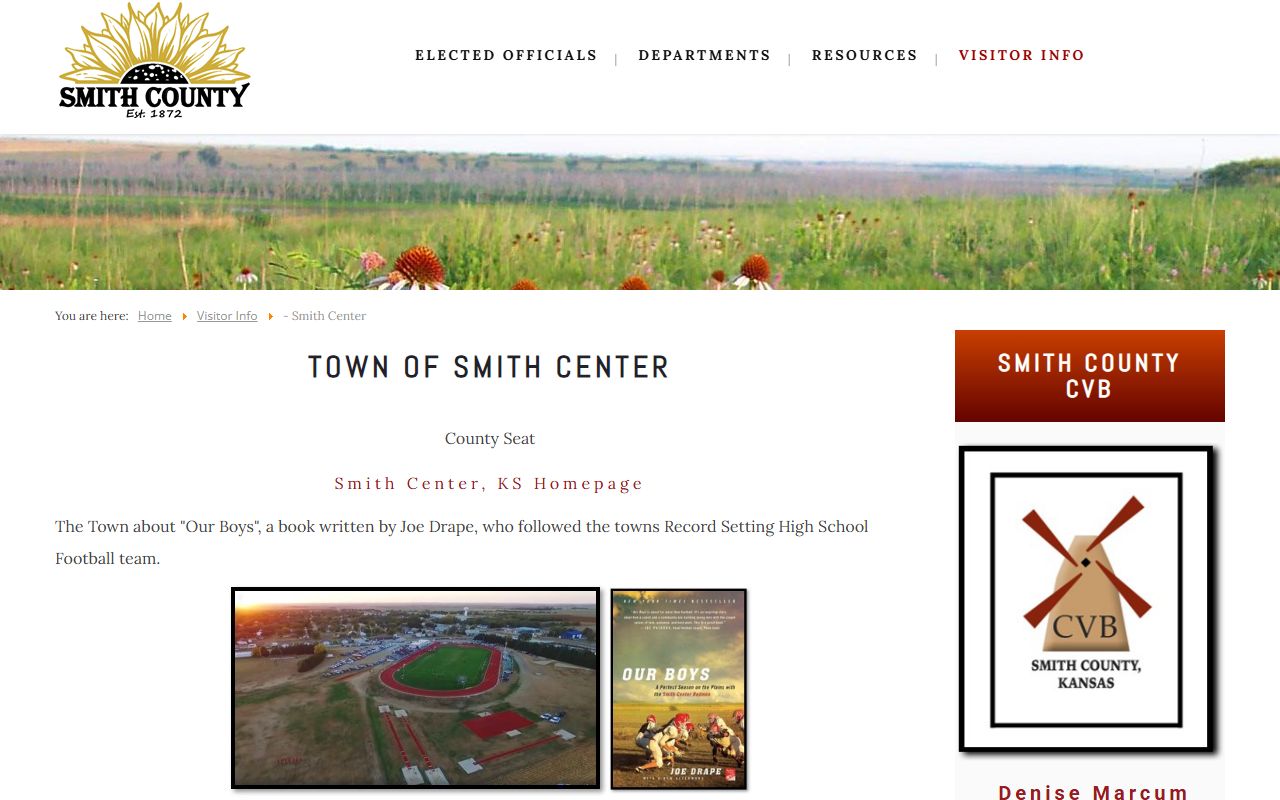
Those courthouse details are useful for record seekers because most older files, copy requests, and office-specific questions still route through offices around the courthouse square.
Smith County District Court
218 S Grant St., PO Box 273
Smith Center, KS 66967
785-282-5140
Smith Center Municipal Court
City of Smith Center
Smith Center, KS 66967
785-282-3249
Smith County Court Records Types
Smith County court records vary by case type and court level. District Court records can include civil petitions, criminal complaints or informations, domestic filings, probate petitions, small-claims papers, traffic cases, protection-order filings, guardianship records, conservatorship records, and related docket events. Municipal court records are narrower and usually involve Smith Center city ordinance or municipal traffic matters.
Some record types are public in part but restricted in detail. Juvenile records, adoption files, mental-health and care-and-treatment matters, sealed criminal cases, and protected personal identifiers should not be treated as open name-search files. For a complete criminal case file, use the criminal court records channel; for the arrest-to-charge path, the court charge record is a narrower part of the case history.
- Civil records: petitions, answers, motions, orders, judgments, liens, and satisfaction entries.
- Criminal records: charges, bond entries, hearings, pleas, motions, disposition, sentence, probation, and restitution.
- Domestic records: divorce petitions, decrees, parenting plans, child-support filings, and post-decree motions.
- Probate records: estate, will, guardianship, conservatorship, inventory, notice, and final-settlement filings.
- Traffic records: citation, court date, plea, fine, payment, dismissal, amendment, or warrant events.
What Smith County Court Records Show
A Smith County District Court record usually starts with a case number, court name, case title, party names, filing date, and case type. The docket then builds a timeline. It may show service, hearings, orders, motions, judgments, warrants, bond entries, disposition, sentencing, appeal notices, and payment events. Public document images may be available through CaseSearch, but sealed or restricted documents are not public.
Readers should separate a docket from the full file. A docket is a chronological index of activity. The full file may include pleadings, orders, exhibits, financial records, and documents that are not all visible online. Certified copies, old paper files, and non-digitized records still require the Clerk of the District Court.
| Field | What It Shows |
|---|---|
| Case Number | Kansas district court identifier used to locate the Smith County file. |
| Case Title | Parties, such as State of Kansas v. defendant or plaintiff v. defendant. |
| Filing Date | Date the petition, complaint, charge, or other opening document was filed. |
| Status | Open, pending, disposed, closed, dismissed, sealed, or restricted when displayed. |
| Docket Events | Chronological filings, hearings, orders, notices, warrants, judgments, and disposition entries. |
| Financial Section | Fines, fees, restitution, court costs, bond, and payment status when exposed. |
Smith County Court Records Access
Kansas public access starts with the Kansas Open Records Act and court-specific access rules. K.S.A. 45-216 states the public policy favoring access to public records, while K.S.A. 45-218 covers inspection rights and agency procedures. Court records also depend on Kansas Supreme Court Rule 106 and Rule 22, which govern court files and public electronic district and appellate case record access.
The Kansas district court records page states that public records are available at courthouses and that other records may be exempt by rule, order, or case law. Smith County court users should start online when possible, but certified copies and sealed-file questions belong with the District Court clerk. County agency records, such as some administrative records, use the Smith County open-records request form instead of the court clerk channel.
The Kansas Judicial Branch records page explains public access to district court files and online case records.
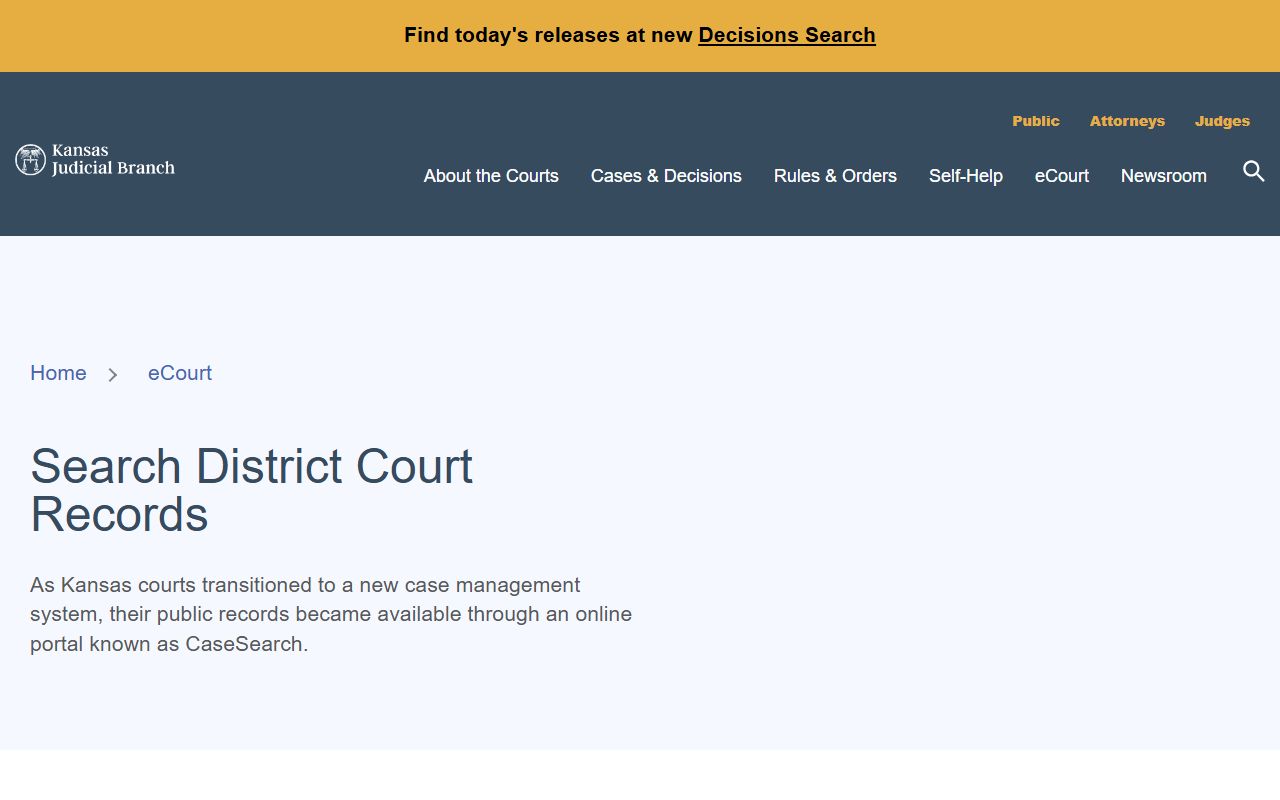
That statewide access page is important for Smith County because the county's trial-court records are part of the Kansas District Court system, not a stand-alone county portal.
Key Statutes:
K.S.A. 45-216 and 45-218 favor access to public records unless another law limits release.
K.S.A. 45-221 lists records public agencies are not required to disclose.
Kansas Supreme Court Rule 22 governs public electronic access to district and appellate records.
Restricted Smith County Court Records
Several Smith County record categories are restricted by statute, court rule, or court order. Juvenile files are limited, and K.S.A. 38-2312 provides a juvenile expungement path. Adoption records are not ordinary open civil files. Mental-health and care-and-treatment records are sensitive. Personal identifiers, financial account numbers, minor information, protected victim or witness details, and medical data may be redacted.
Sealing and expungement are different. A sealed record is closed or redacted from general public access by law or order. Expungement limits public access to qualifying convictions, arrest records, diversion agreements, or juvenile records after statutory conditions are met. K.S.A. 60-2617 is also important for warrant-related sealing because some arrest-warrant case material may stay sealed until the warrant is executed or denied.
Note: A missing online result is not proof that no Smith County case, warrant, or restricted record exists.
Smith County Sheriff Records
Smith County Sheriff Travis Conaway's office is the direct local channel for jail, custody, warrant logistics, offender registration, VIN inspections, fingerprinting, and sheriff records. The Sheriff's Office is at 217 S. Jefferson St. in Smith Center, east of the courthouse. No official public online Smith County jail roster or active-warrant list was found in the research file, so many jail and warrant questions require a phone call to 785-282-5180.
Smith County Jail information is highly local. In-person visitation is usually Tuesdays from 2:00 p.m. to 4:00 p.m., subject to staff availability and facility needs. CIDnet handles phone calls, messaging, and video services. Commissary is not handled through ordinary inmate cash books; approved items are brought to the jail by family or friends, generally on Tuesdays unless jail administration authorizes another time.
Smith County Marriage Divorce Probate
Kansas marriage licenses are handled through the Kansas Judicial Branch online marriage license process, while completed licenses and county-level marriage information connect back to the District Court. KDHE Office of Vital Statistics issues certified marriage and divorce certificates through state channels. Divorce case files remain District Court domestic records, not KDHE case files.
Probate is handled by the Probate Division of the District Court in Smith County. There is no separate Smith County Probate Court page or probate clerk office in the research. Probate files may include wills, estate petitions, inventories, orders, guardianships, conservatorships, accountings, and final settlements. Small estates may use the Kansas Judicial Council small-estate affidavit under K.S.A. 59-1507b when the statutory limit and asset facts fit.
- Testator
- A person who made a will.
- Executor
- A person appointed to carry out a will and manage estate tasks.
- Conservator
- A court-appointed person who manages another person's property or finances.
Smith County Records Fees
Smith County posts local open-records fees through the County Clerk for county-held records. Court filing and certified-copy charges may depend on the District Court and the type of request, so court users should call the Clerk of the District Court when a certified court document is needed. For non-court county agency records, the county's open-records page and request form give the clearest fee schedule.
| County Record Item | Amount |
|---|---|
| Letter or legal size copy | $0.25 per page |
| Oversize copy | $0.50 per page |
| Fax sent or received | $0.25 per page |
| CD | $25.00 |
| Research and preparation time | $20.00 per hour or the employee's hourly rate, whichever is higher |
Interpreting Smith County Court Records
Common terms in Smith County court records have specific meanings. A complaint starts a civil case or may describe a criminal charge. An information is a prosecutor-filed criminal charging document. A docket is the event list, not the full file. A disposition is the outcome of a charge or case. A conviction means guilt was found by plea or trial; a charge alone is only an allegation.
Charges Filed › First Appearance › Arraignment › Motions or Plea › Disposition › Sentencing is a basic criminal case flow. Civil, probate, and domestic cases use different filings, but the same habit helps: read the docket in date order, then request the actual order or judgment if the docket summary is not enough.
Smith County Record Limits
Online Smith County court records can lag behind courtroom events, clerk processing, warrant returns, or payment updates. KASPER offender information is also limited to KDOC-related custody and supervision records and is not a full criminal history. KDHE certificates are vital-statistics records, not full court files. KDOR driver status is a summary and may not show every out-of-state sanction.
Note: Confirm critical dates, warrants, balances, and certified-copy needs with the originating Smith County or Kansas office.
Smith County Court History
The courthouse's official history gives the Smith County court system a clear physical anchor. The current courthouse was completed in 1920 at a furnished cost of about $98,000 and was paid for in full when ready for occupancy. The attic once included padded jail cells and common cells, a detail that ties the building's court and custody history together.
Smith Center remains the county seat, and the courthouse sits in a north-central Kansas county that borders Nebraska. U.S. 281, Kansas Highway 8, U.S. 36, and Kansas Highway 9 are the main highway references in the official visitor material. These local details matter for people coming to court, requesting copies, or visiting the sheriff's office after a hearing.
Smith County Court Records FAQ
Where are Smith County District Court records searched?
Public District Court case information is searched through Kansas CaseSearch or requested from Smith County District Court at the courthouse. Older records, certified copies, and restricted-file questions should go to the Clerk of the District Court.
Does Smith County have a separate probate court?
No separate probate court was located in official sources. Probate matters are handled through the Probate Division of the District Court, and related real-estate transfer records may also involve the County Clerk or Register of Deeds.
Is there an online Smith County jail roster?
No official public online Smith County jail roster was found. Current county-custody information should be checked through the Sheriff's Office or jail phone line.
Can Smith Center Municipal Court cases appear in CaseSearch?
Municipal ordinance and city traffic matters are a separate local channel. Call Smith Center Municipal Court for the schedule and municipal case questions before assuming the District Court portal has the record.
Are sealed warrants visible online?
Not always. Kansas law can keep arrest-warrant case material sealed until the warrant is executed or denied, so an online search can miss warrant-related information.