
Smith County Court Docket Basics
A docket is the running index of a case. It is not the whole file. In Smith County District Court, a docket may list the date a petition, complaint, charge, motion, order, notice, bond entry, hearing, judgment, warrant, disposition, sentence, or appeal notice was entered. It helps show case progress even when the actual document image is not public online.
That distinction matters in Smith County because Kansas CaseSearch may expose docket and case information while certified copies and older documents still require the Clerk of the District Court. A docket entry may tell a user that an order exists, but the entry alone may not include the signed order. A payment entry may show an amount or status, but it may not explain the legal reason for the charge without the related case document.
- Docket
- The chronological list of filings, hearings, orders, and case events.
- Disposition
- The final outcome of a case or charge, such as dismissed, judgment entered, guilty, or not guilty.
- Hearing
- A scheduled court appearance or proceeding listed by date, time, type, and court when public.
- Journal Entry
- A written court entry or order recorded in the case file.
Find Smith County Court Dockets
Smith County District Court docket information begins with Kansas CaseSearch when the case is public and in the District Court system. Smith County is part of the Kansas 17th Judicial District, and the local District Court sits at the Smith County Courthouse, 218 S Grant St., PO Box 273, Smith Center, KS 66967, phone 785-282-5140. The clerk is the follow-up contact for docket copies, certification, sealed-file questions, and older material not visible online.
- Identify whether the matter is a District Court case, Smith Center Municipal Court case, or citation handled through a payment portal.
- Search Kansas CaseSearch by case number when available, or by party name, business name, or citation if the number is unknown.
- Screen search results by county, court, filing date, case title, and case type before relying on a match.
- Open the docket or event list and read the entries in date order. Look for filings, hearings, orders, warrants, disposition, sentence, and financial entries.
- Contact the Clerk of the District Court for certified docket entries, document copies, or records that need staff review.
The Kansas Judicial Branch pay-a-fine-or-fee page is a separate payment access point for traffic, criminal, juvenile offender, and fish-and-game fines or fees. It helps with payment status and citation-linked matters, but it is not the complete Smith County docket file.
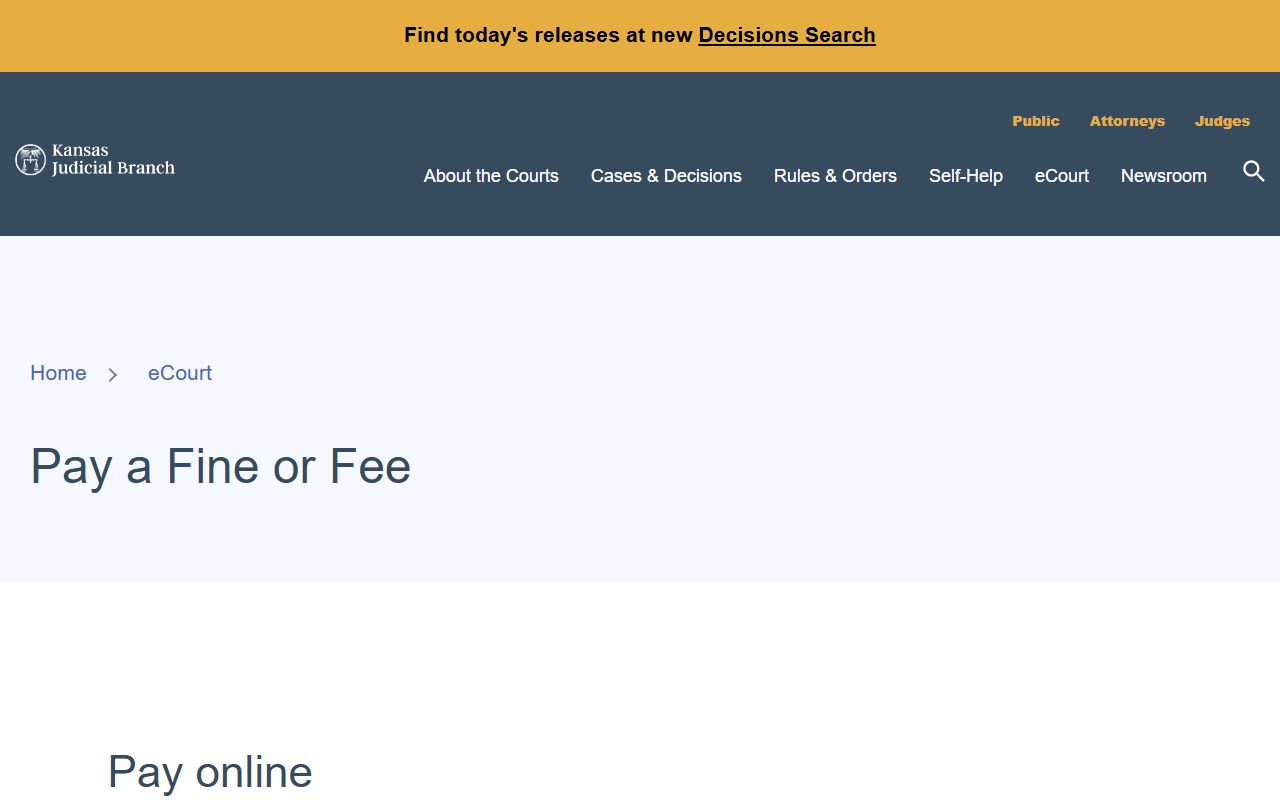
The payment page is useful when a docket event created a fine or fee, but case history still belongs in the court docket.
Smith County Docket Event Fields
No public Smith County sample docket was opened during research, so the field inventory below follows the district court record fields documented in the research file. These are the kinds of entries a public docket may show when the information is not sealed, redacted, or limited by court rule. Some entries are short, and some link to documents only when public electronic access allows it.
| Field | What It Shows |
|---|---|
| Entry Date | Date the filing, hearing, notice, order, warrant, judgment, disposition, or payment event was entered. |
| Event Type | Short label for the docket activity, such as motion, hearing, order, journal entry, bond, disposition, or sentencing. |
| Party Filing | The party or office tied to the event, when displayed, such as plaintiff, defendant, petitioner, respondent, or State of Kansas. |
| Hearing Detail | Date, time, type, courtroom, judge, or hearing officer if those details are public and shown. |
| Financial Entry | Fines, fees, restitution, court costs, bond, or payment status when exposed. |
| Document Link | Public document access when CaseSearch makes a document image available; restricted documents are not public. |
| Status | Open, pending, disposed, closed, dismissed, sealed, or restricted when the docket shows a status field. |
Smith County Dockets by Court
Smith County District Court is the main trial court for local case dockets. It handles criminal, civil, domestic, divorce, probate, guardianship, conservatorship, small claims, juvenile where public, and other District Court matters. The Kansas Supreme Court is the highest state court, the Kansas Court of Appeals handles most appeals from district courts, and Kansas Municipal Courts handle city ordinance cases within city limits.
Smith Center Municipal Court is the local lower-court channel for municipal matters. The city court page says the municipal court interprets and adjudicates applicable state laws and city ordinances and provides 785-282-3249 for the court schedule. A municipal case may have a schedule or payment path outside the District Court docket. For city police matters, Smith Center Police Department is at 117 1/2 W. Court, phone 785-282-6555.
- Smith County District Court: general trial court dockets for public district case events.
- Smith Center Municipal Court: city ordinance and municipal traffic schedule questions through the city court line.
- Kansas Court of Appeals: appellate docket path for most appeals from District Court, unless a matter goes directly to the Kansas Supreme Court.
- Central Payment Center: payment and violation search path for eligible citation-linked fines and fees.
Smith County Dockets and CPC
The KSCourts Central Payment Center is relevant when a docket or citation leads to a payable fine or fee. It is most useful for traffic, criminal, juvenile offender, and fish-and-game payment questions. It does not replace CaseSearch for public District Court docket history, and it does not replace a municipal court call for local city court schedule questions.
| CPC Search Path | What It Uses | Best Use |
|---|---|---|
| Citation or case search | Citation or case information plus date of birth | Checking eligible payable violations tied to a known citation or case. |
| Driver license search | Driver license number and state | Finding eligible violations when the citation number is not handy. |
| Payment portal | Violation match and payment details | Paying fines or fees through the official Central Payment Center path. |
The Central Payment Center violation search page supplies the citation-search side of a payment event tied to eligible Kansas court fines and fees.
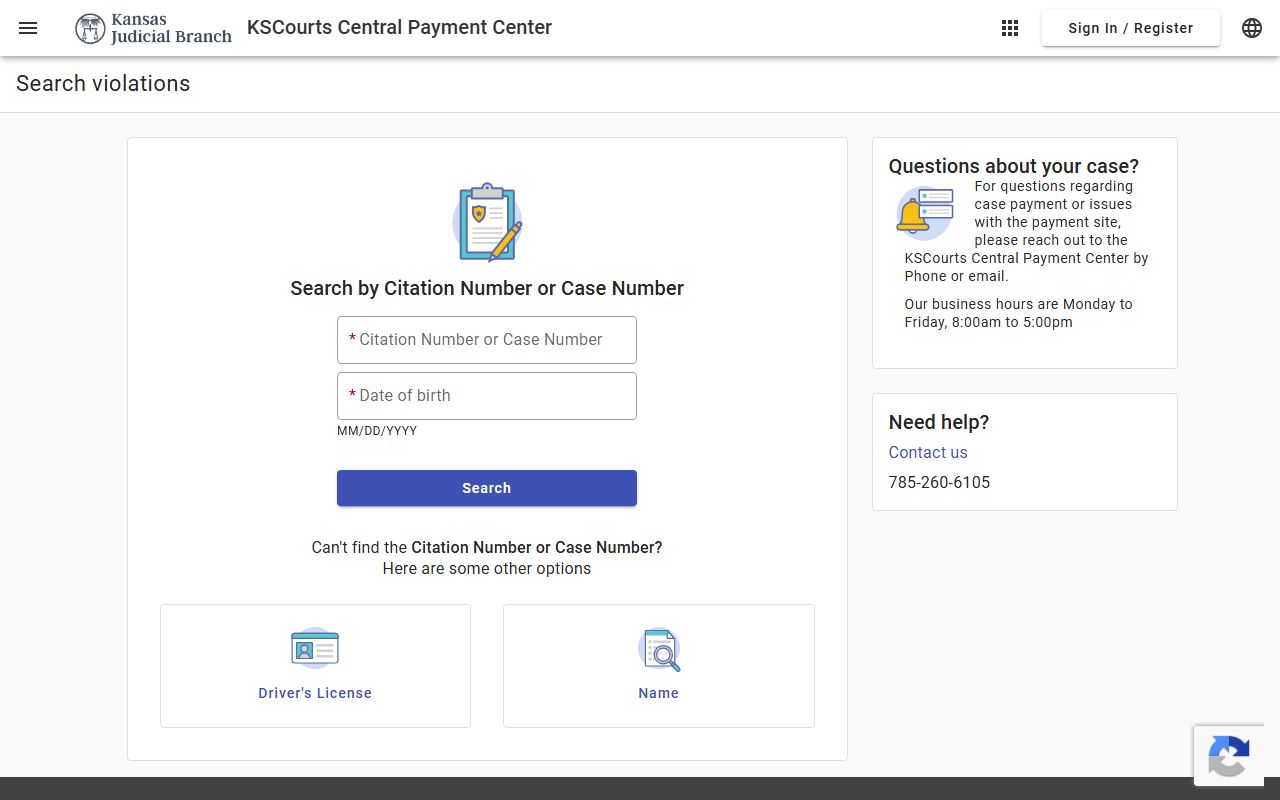
A CPC result should be read as a payment or violation access point, not as the full docket history for a Smith County court case.
Smith County Docket vs Case File
A docket is the index. The full case record is the file. For a criminal case, the docket can list arraignment, motions, plea, disposition, sentencing, and bond activity, while the full case file may contain the complaint or information, orders, journal entries, and sentencing documents. For a civil case, the docket can list petition, answer, motions, orders, judgment, and satisfaction, while the file holds the pleadings and orders themselves.
| Docket | Full Case Record | |
|---|---|---|
| Format | Chronological list of events | Documents, docket, orders, notices, and financial entries |
| Access | Often the first public online view | May require CaseSearch document access, clerk request, copy fee, or courthouse inspection |
| Use | Track progress, hearing dates, status, and outcome clues | Review filings, signed orders, judgments, pleadings, and certified copies |
| Limits | Short entries can omit legal detail | Sealed, juvenile, adoption, mental health, and redacted content may remain closed |
The official Central Payment Center portal is a docket-adjacent payment tool for eligible Kansas court fines and fees.
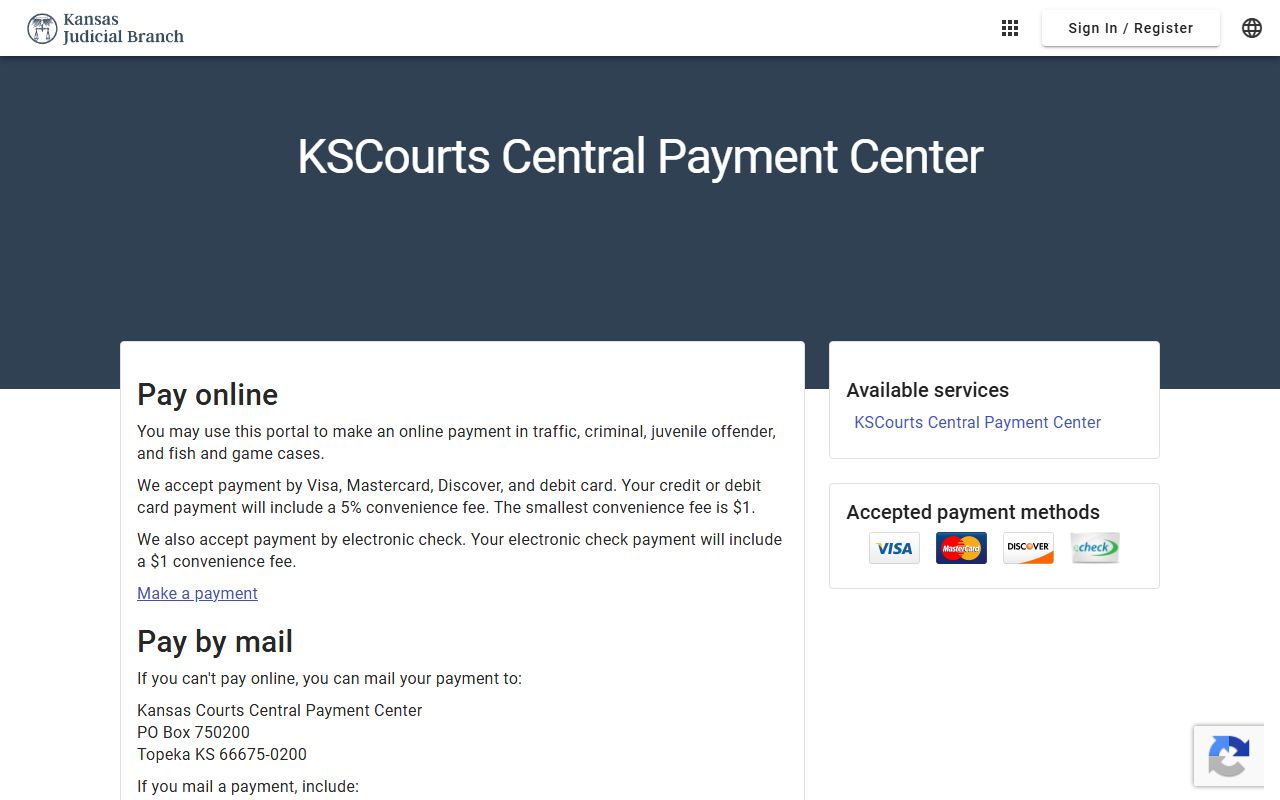
The portal can help resolve a fine or fee entry, but the Clerk of the District Court remains the source for certified docket copies.
Read Smith County Docket Entries
Read docket entries from oldest to newest. The first entries usually identify the opening filing, charge, petition, or citation. Later entries show service, hearings, continuances, motions, orders, bond actions, warrants, payments, disposition, judgment, sentencing, or closure. In criminal matters, a charge entry is not a conviction. The docket must be followed through the disposition and sentence entries before drawing conclusions about outcome.
Watch for restricted entries. Juvenile cases, sealed files, adoption records, mental health matters, protected personal identifiers, and some warrant-related material may be absent or redacted. Kansas Supreme Court Rule 22 governs electronic public access to district and appellate case records, while court orders and statutes can limit what is displayed.
Note: A missing public docket entry does not prove no Smith County court event exists.