
Smith County Criminal Court Records
A criminal court record is the case file kept by the court after the prosecutor files formal charges. In Smith County, District Court criminal files can include the complaint or information, arrest or summons events, charge list, statute references, bond orders, first appearance, preliminary hearing, arraignment, plea, diversion, motions, journal entries, acquittal, dismissal, conviction, sentencing, restitution, probation, and post-judgment filings. The Smith County arrest records and charges page focuses more closely on the arrest-to-charge step.
Smith County District Court is the general-jurisdiction trial court for local felony and many misdemeanor criminal matters. Smith Center Municipal Court handles city ordinance and municipal traffic matters, so a municipal case may not follow the same docket path as a District Court criminal case. The Smith County Attorney decides whether charges should be filed after law enforcement submits reports, and the court file begins when the charging document is filed with the court.
The official Smith County Attorney page identifies Tabitha D.R. Owen as County Attorney and describes the office's role in prosecution, victim services, county legal advice, and charge review.
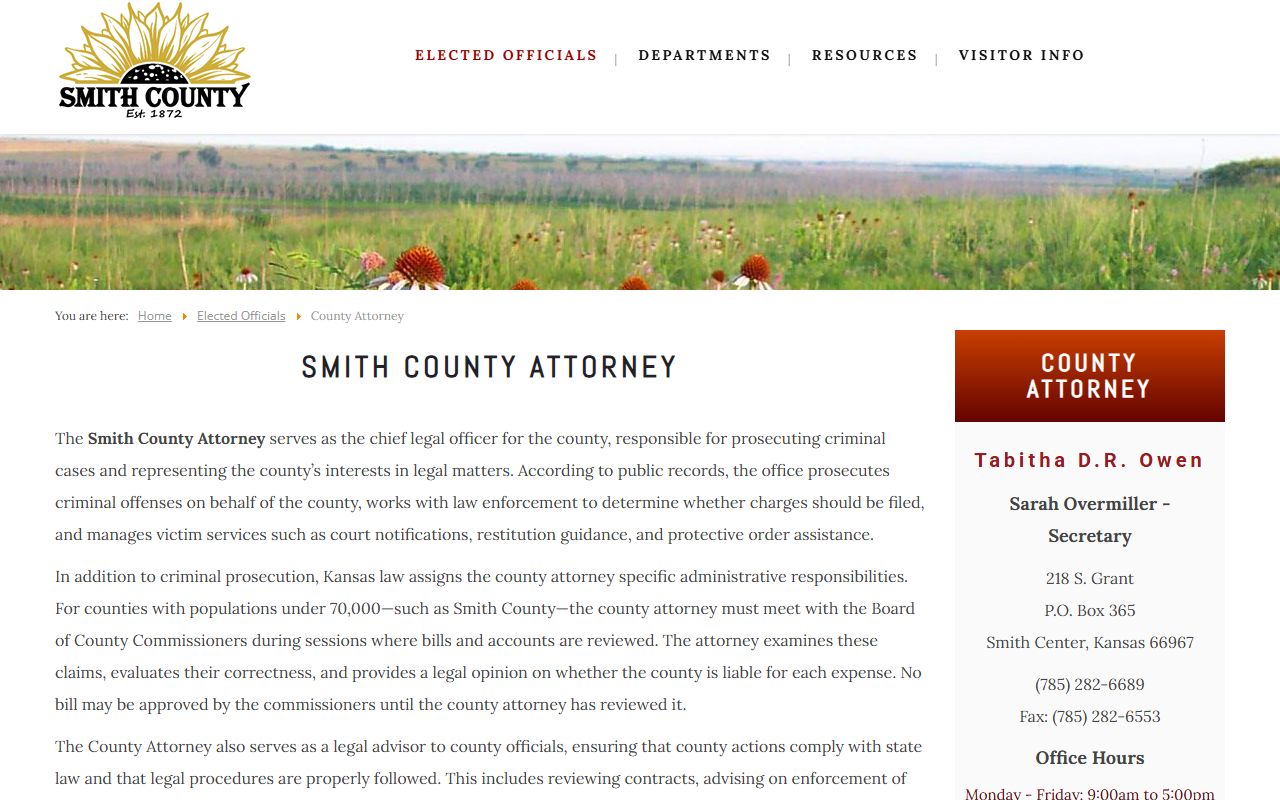
That prosecutor role explains why the criminal case file begins only after law enforcement information is reviewed and formal charges are filed.
Search Smith County Criminal Cases
Public Smith County District Court criminal case information is searched through Kansas CaseSearch. Search by case number when known, or by defendant name, business name, citation, and other public criteria when available. A name match should be screened by county, court, filing date, case title, and case type because statewide results can include people with similar names.
- Confirm the case belongs in Smith County District Court rather than Smith Center Municipal Court.
- Search by exact case number first, or use the defendant's full name and approximate filing year.
- Open the docket and read the filed charge entries, bond events, hearing settings, and disposition lines in order.
- Check whether the case ended by dismissal, diversion, plea, verdict, or sentence before treating the record as final.
- Call the Clerk of the District Court at 785-282-5140 for certified copies, older files, missing document images, or sealed-access questions.
The statewide Kansas criminal history record search is different from a Smith County criminal court record. It is a criminal-history path, while CaseSearch and the clerk show the court case file. Both may be relevant, but they answer different questions.
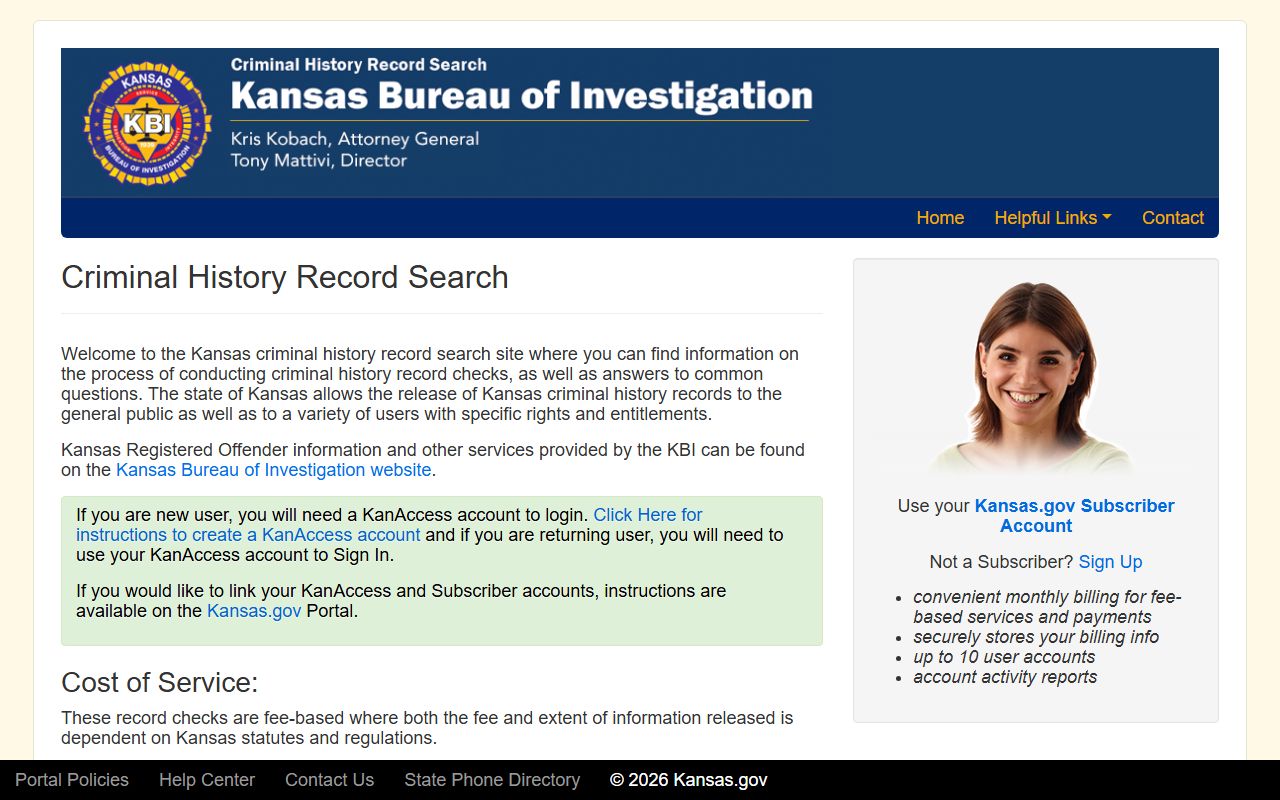
The statewide history search can supplement court review, but the filed case, docket, and sentence remain court-record questions.
Smith County Criminal Case Flow
A Smith County criminal court record grows in stages. The charge is the accusation filed with the court. The arraignment records the plea. Pretrial entries track motions, hearings, continuances, discovery orders, and bond conditions. A case may then resolve by diversion, dismissal, plea, or trial. If there is a conviction, sentencing entries can show jail, prison, probation, restitution, costs, fines, and post-judgment controls.
Case flow: Charges Filed › First Appearance › Arraignment › Pretrial / Motions › Plea or Trial › Disposition › Sentencing
| Stage | What Happens |
|---|---|
| Charges Filed | The complaint or information starts the court case and lists offenses, counts, and statute references. |
| First Appearance / Bond | The court addresses initial appearance, custody or release, bond terms, and next settings. |
| Arraignment | The defendant is advised of charges and enters a plea such as guilty, not guilty, or no contest where allowed. |
| Pretrial / Motions | Parties file motions, orders are entered, hearings occur, and charges may be amended or dismissed. |
| Plea or Trial | The case resolves by plea, diversion, trial verdict, dismissal, or other disposition. |
| Sentencing | The court enters punishment or terms after conviction, including probation, restitution, costs, fines, jail, or prison when ordered. |
What Smith County Criminal Records Show
The criminal case file is broader than the charge list. It can show whether a charge stayed pending, was amended, was dismissed, went to diversion, ended in acquittal, or became a conviction. This is why the docket must be read past the first charge entry. A filed allegation at the start of the case does not prove guilt.
| Field | What It Shows |
|---|---|
| Case Number | The Kansas district court case number assigned to the criminal file. |
| Defendant | Name of the person charged, with protected identifiers redacted where required. |
| Charges | Offense names, count numbers, statute references, severity, and filed or amended allegations. |
| Bond | Release terms, cash or surety bond entries, own-recognizance release, or custody status when public. |
| Plea | Formal response to the charges, such as guilty, not guilty, or no contest where applicable. |
| Motions | Requests asking the judge to issue rulings before or after trial. |
| Disposition | Outcome of each charge or case, including dismissal, diversion, acquittal, plea, or conviction. |
| Sentence | Court-ordered terms after conviction, such as probation, jail, prison, restitution, fines, fees, or costs. |
Smith County Charges vs Convictions
Criminal court records often list charges before they list an outcome. A charge is an allegation filed by the prosecuting authority. A conviction is a finding of guilt by plea or trial. A Smith County criminal case can show charges that were dismissed, amended, reduced, diverted, or resolved by acquittal. Read each count through its final disposition.
| Charge | Conviction | |
|---|---|---|
| Stage | Accusation filed with the court | Final finding of guilt by plea or trial |
| Record Location | Complaint, information, docket, and charge list | Disposition, journal entry, sentence, and judgment entries |
| Meaning | Not proof of guilt | Outcome that can lead to sentence and collateral effects |
| Change Over Time | Can be amended, reduced, dismissed, or diverted | May later be appealed, modified, or expunged if eligible |
The Kansas adult expungement statute applies to qualifying convictions, arrest records, and diversion agreements under statutory conditions.
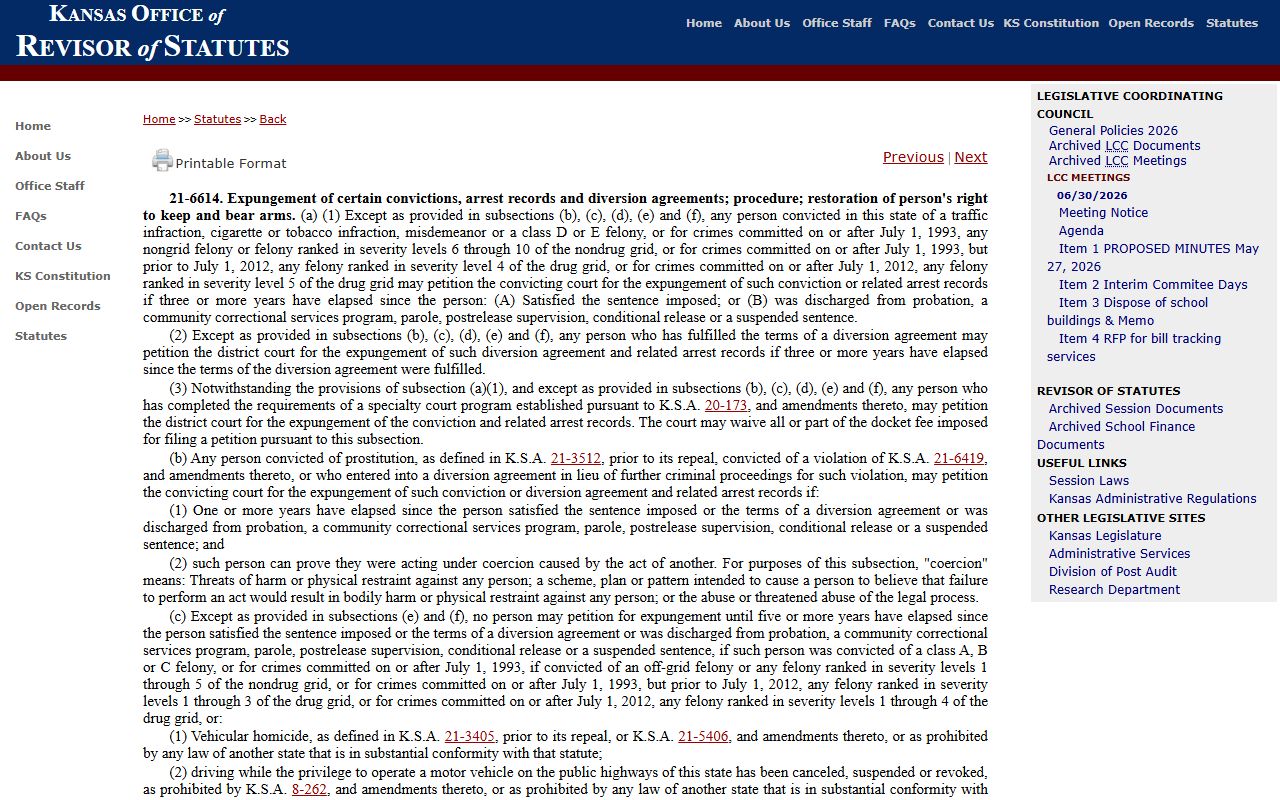
Expungement language should be read with the final disposition, because eligibility depends on the type and outcome of the record.
Read Dispositions and Sentences
Disposition is the outcome. In a Smith County criminal court record, it may appear at the case level or charge level. Possible outcomes include dismissed, dismissed with prejudice, dismissed without prejudice, diversion, guilty plea, no contest plea where allowed, not guilty verdict, conviction, or acquittal. Sentencing entries come after conviction and may include probation, restitution, fines, fees, jail, prison, or post-judgment review.
Bond entries also matter, especially early in a case. The Smith County Jail page explains cash bond, surety bond, and own-recognizance release under Kansas bond practice. A bond entry is not the same as a sentence. It concerns release and appearance while the case is pending. For current custody information, the jail channel differs from the criminal case file.
Note: Read the final docket entries before treating any Smith County criminal charge as the case outcome.
Sealed vs Expunged Criminal Records
Sealing and expungement both limit public access, but they are not the same. Sealing can close or redact case records under statutes, court rules, or orders. Expungement is a statutory process that can limit public access to qualifying adult convictions, arrest records, diversion agreements, municipal matters, and juvenile records. Kansas law may still allow certain criminal-justice access after an order.
| Sealed | Expunged | |
|---|---|---|
| Public Visibility | Closed or redacted from general public access by law or order | Public access limited under an expungement order and statute |
| Common Source | K.S.A. 60-2617, court order, rule, or protected case type | K.S.A. 21-6614, K.S.A. 22-2410, or K.S.A. 38-2312 depending on record type |
| Effect | May hide some or all case material from public view | Limits public access and affects how the record is treated in many contexts |
| Access Remaining | Authorized parties, attorneys, agencies, or court order may be required | Criminal-justice access may remain where the statute allows |
The Kansas arrest-record expungement statute is especially relevant when the record is arrest-only rather than a conviction.
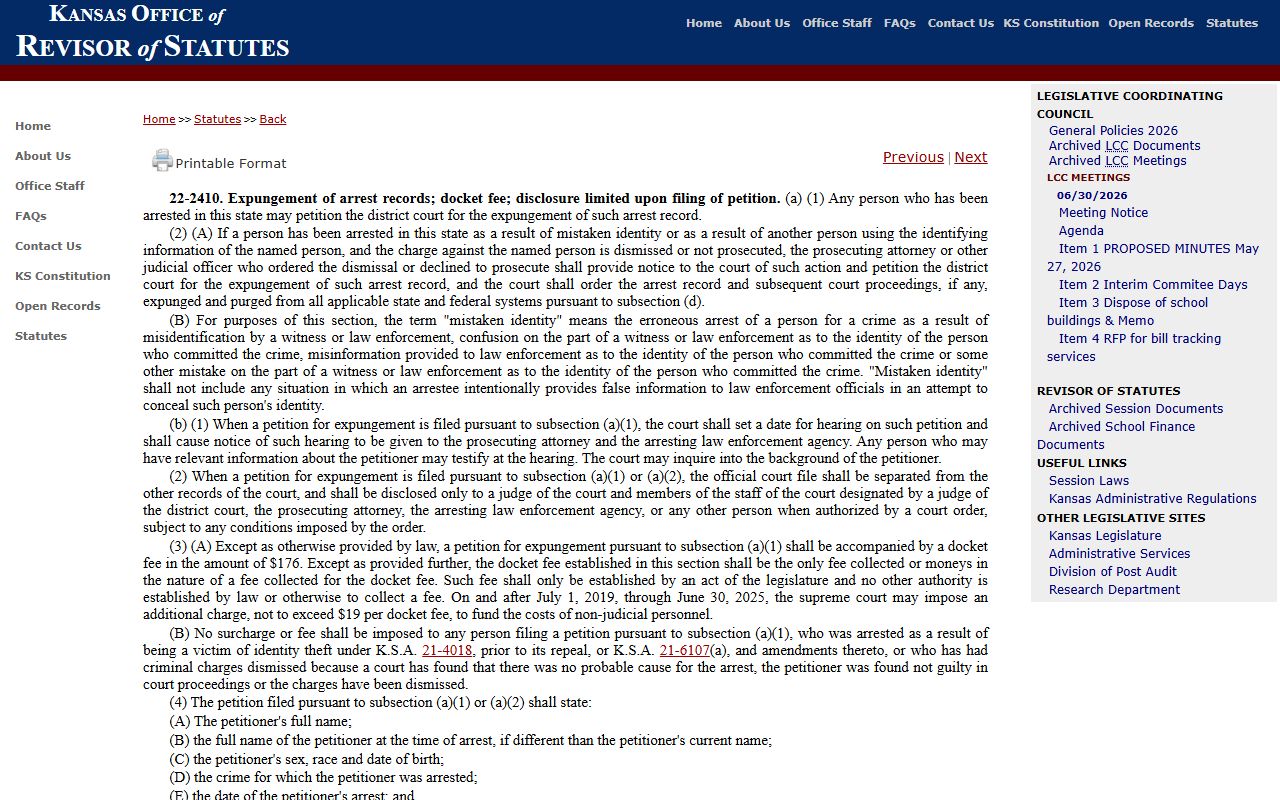
That source helps separate arrest-only expungement questions from conviction or diversion expungement questions.
Public Access to Smith County Criminal Records
Kansas court records are governed by court rules as well as open-records law. Kansas Supreme Court Rule 106 addresses court files and records under court control. Kansas Supreme Court Rule 22 governs public electronic access to district and appellate case records. K.S.A. 45-221 lists categories that agencies are not required to disclose.
Some criminal material is not public. Juvenile offender records are restricted, and K.S.A. 38-2312 provides a juvenile expungement path. Sealed files, protected victim or witness information, financial account numbers, Social Security numbers, mental health information, and some warrant-related material may be redacted or withheld.
The official juvenile expungement statute page supports the point that juvenile criminal records are not ordinary public Smith County criminal court records.
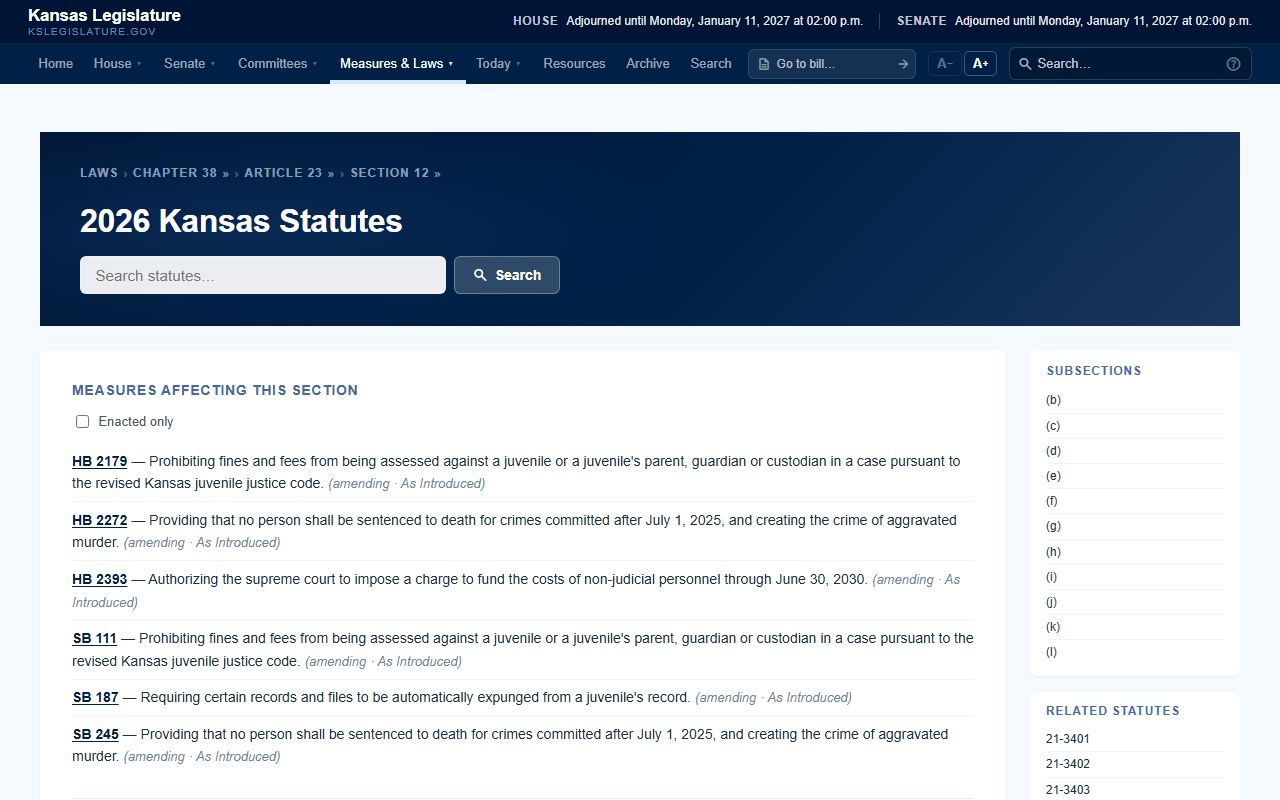
The juvenile source supports the access limit: do not assume public name-based lookup is available for juvenile files.
Counsel and Smith County Criminal Cases
No Smith County local public defender office was located in the research. Kansas State Board of Indigents' Defense Services provides defense counsel through public defender offices and assigned or contract counsel. For Smith County criminal defendants, appointment of counsel is handled through the court and BIDS assigned-counsel process unless a specific local public defender office is later confirmed.
The Kansas State Board of Indigents' Defense Services is the official statewide defense-services source. BIDS contact information lists an administrative office at 700 SW Jackson St., Suite 500, Topeka, KS 66603-3758, phone 785-296-6631, and inquiry@sbids.org.

The BIDS source belongs with criminal court records because counsel appointment can shape docket entries, motions, pleas, and case timing.